Money Canvas
How advocating for bilingual coaches changed the way Thrivent builds for Spanish-speaking users
When I joined Money Canvas, I was asked to fix some Spanish translations. What I found was bigger than bad copy — it was a system failure that was costing Thrivent its bilingual coaches, and with them, access to the Spanish-speaking users who needed this program most.
This is the story of how I turned a translation cleanup into a comprehensive bilingual content system — and why I had to fight for the right to do it.
What I walked into
Money Canvas is a three-session financial coaching program supported by a web app. The English experience was mature. The Spanish experience was falling apart.
The translations were being done by Salvador — an ops team member, not a translator. There were no guidelines, no glossary, no quality standards. The result was choppy, literal translations with inconsistent terminology and tone that sounded robotic in Spanish.
The Multicultural Experience team had no framework to support translators. Every translation was a one-off decision. Different teams — Product, Growth, Multicultural, Session Experience — were creating Spanish content in silos, with no shared reference for what "good" looked like.
The landing page wasn't even translated. Which meant fewer Spanish-speaking users were being reached in the first place.
And the coaches were leaving. Bilingual coaches — the people actually delivering these sessions — felt unheard and unsupported. The Spanish content they were working with didn't match the warmth and clarity they brought to real conversations. They were improvising fixes mid-session, and some had stopped leading bilingual sessions entirely. Fewer coaches meant fewer sessions. Fewer sessions meant fewer families getting access to financial coaching in their language.
This wasn't a copy problem. It was an access problem.
How I reframed the ask
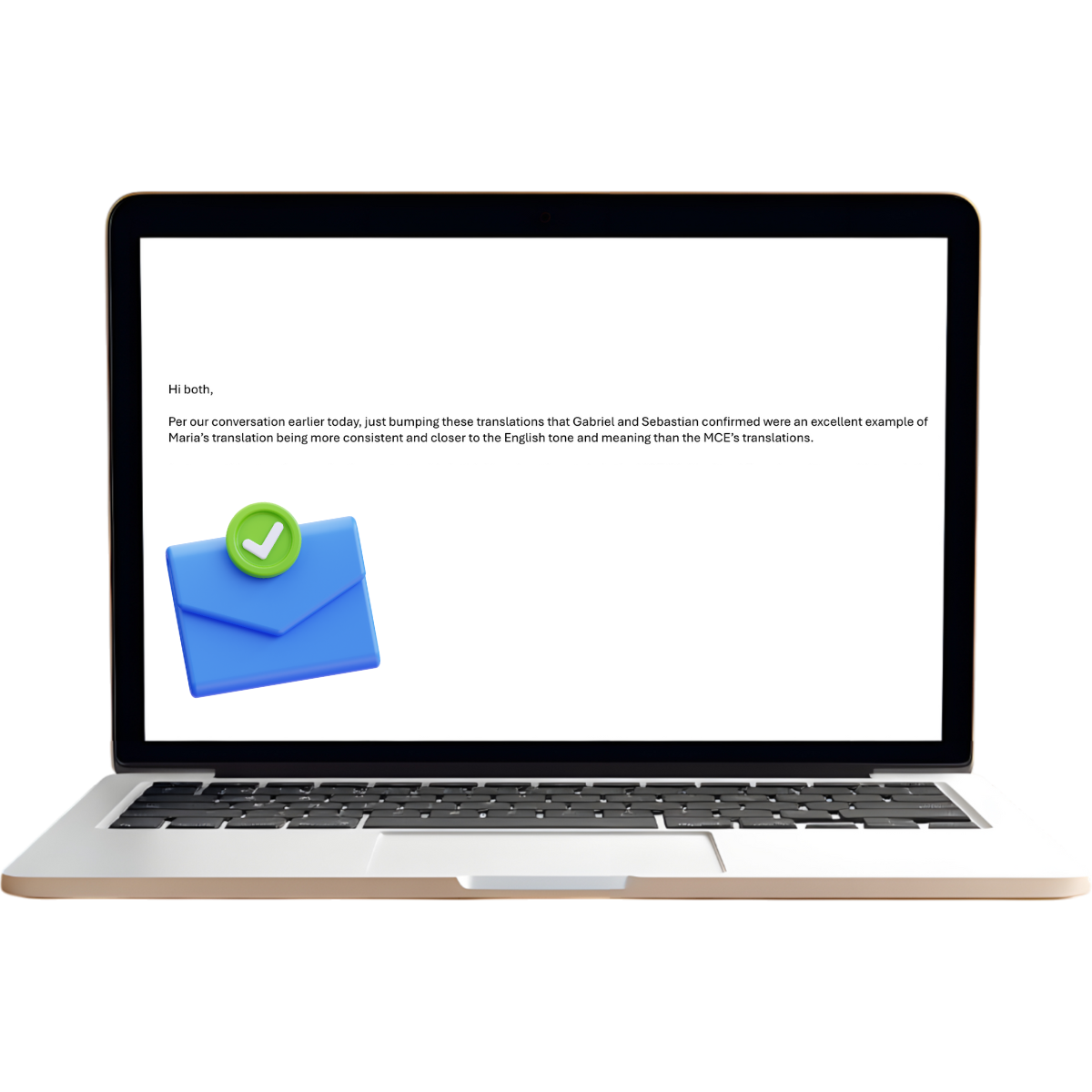
I was hired to fix translations. But after auditing the Spanish content and interviewing bilingual coaches, I realized fixing individual translations was treating the symptom, not the disease. The real need was a system — guidelines that could scale, that could help any translator or content creator produce quality Spanish content without depending on one person's judgment.
I presented my findings to my manager and the PMs: here's the state of the Spanish experience, here's what coaches are telling us, here's what it's costing us, and here's what I recommend instead.
The trade-off was real.
I had three months. I could either spend that time translating a volume of screens, or I could build the content guidelines that would make every future translation better. One addressed the backlog. The other one scaled. I advocated for the guidelines — and got the green light.
This didn't happen in a vacuum. Before this project, I had already met with PMs to understand their needs, discuss the cost of not translating the landing page, and build relationships across teams. When I made my case, I had their support because they'd already seen how I thought.
My discovery process:
1.End-to-end content audit
I audited the existing content and documented every issue by product vertical + impact. This allowed me to map out all content fixes required.
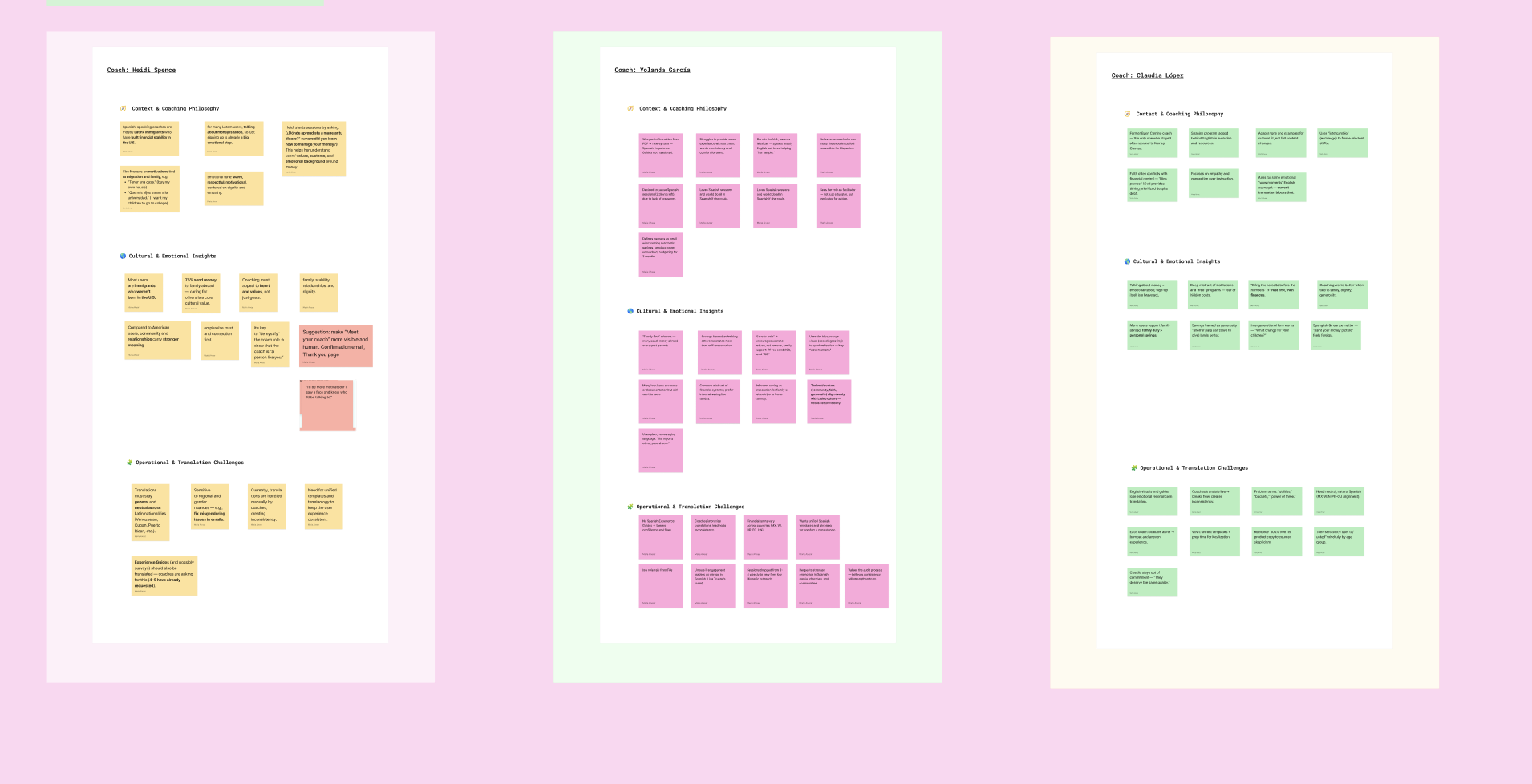
2. Stakeholder interviews
Scheduled 1:1 with Designers, PMs, Coaches, Growth Director, and Localization managers to identify current-state user & stakeholder pain points, operational gaps and other dependencies
3. Incognito sessions as a user
Documented key moments in session experience from a user’s POV to validate product promise.
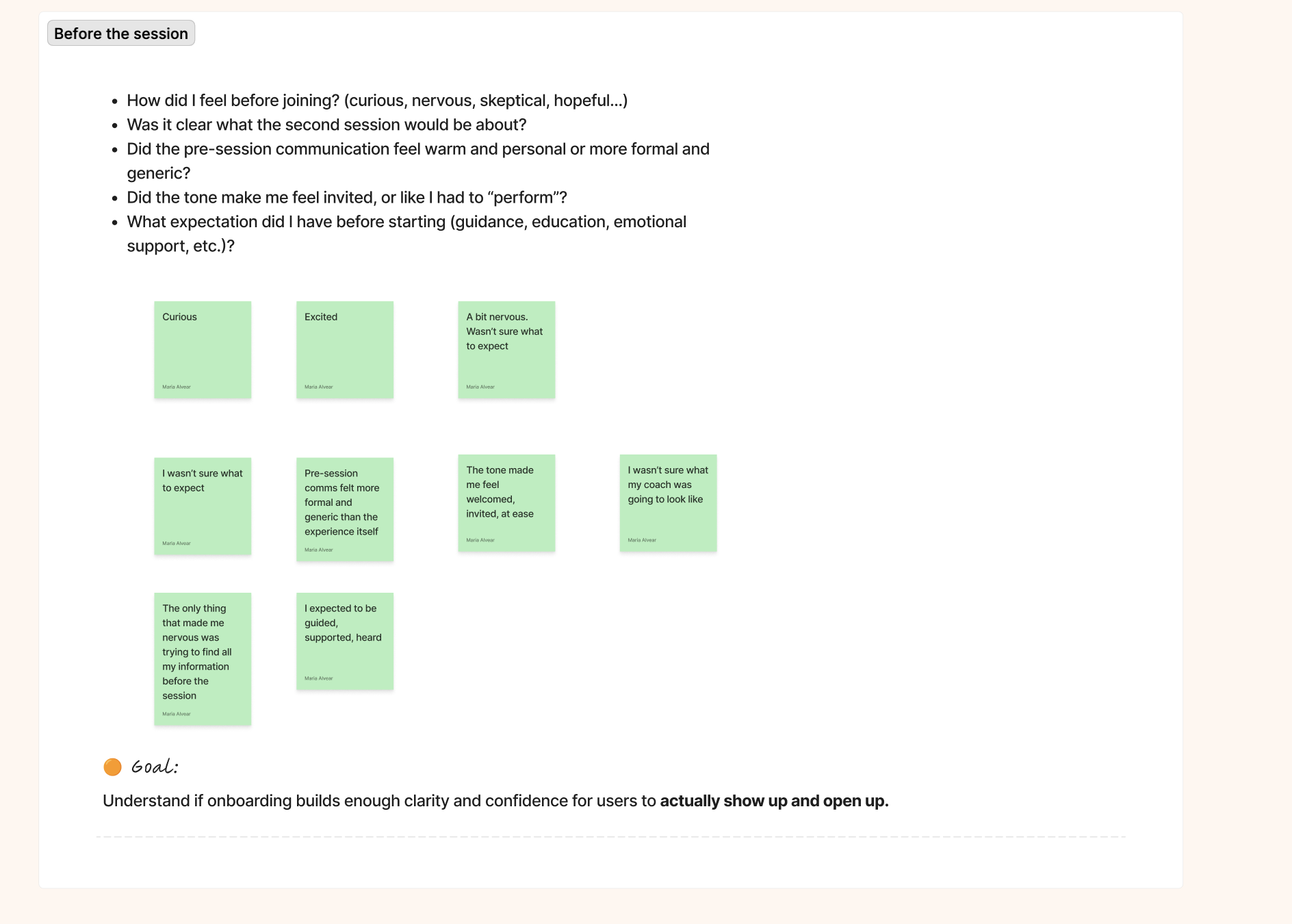
4. What I discovered
From my audit:
Literal translations that sounded robotic across Growth and Session Experience
Tone mismatches (too formal, too vague, or emotionally disconnected)
Spanish microcopy forced into English UI constraints
Inconsistent terminology
Growth assets (emails, SMS, intake flow) not aligned with brand voice
TLDR:
Teams were working in silos, translators lacked guidance, and content decisions were being made reactively without a unified framework.
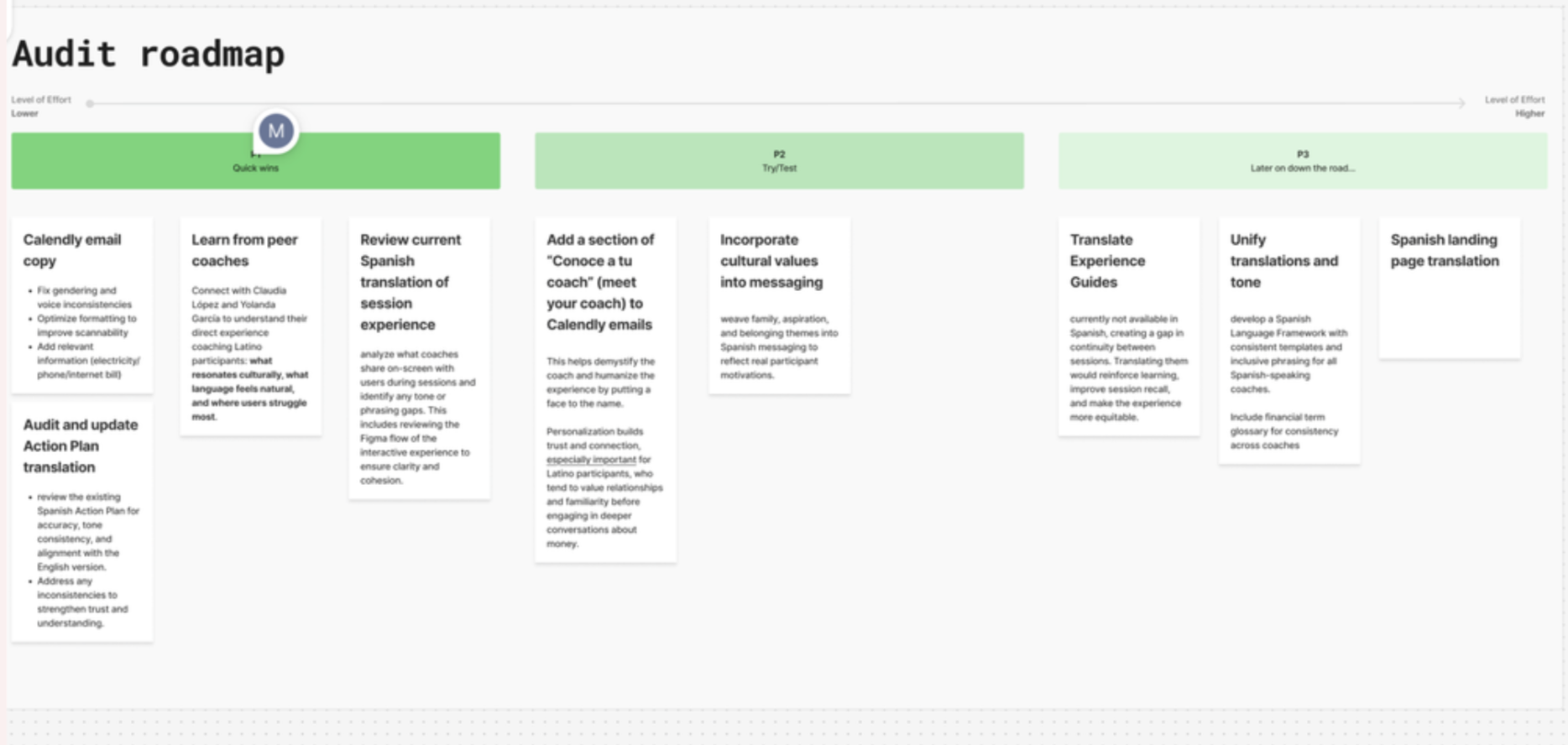
I was able to put together a roadmap of actionable tasks . I prioritized them using the “Impact/Effort” matrix.
This gave me a clear idea of all “low-hanging-fruit” content fixes that could be addressed right away.
As to my manager and our 2 PMs, this roadmap represented an insight into of all content-related needs for their own strategy backlog.
But most importantly, this roadmap highlighted the ever-growing need for defined content and translation guidelines
Note: I used AI to synthesize my findings, notes, and interview transcripts.
From interviews:
Product designers had no set content standards to guide them when adding new UI elements to design system
Multicultural team that handled translations didn’t have defined content or translation guidelines from Money Canvas
Experience Guides (coach scripts) written in English were translated by coaches, sometimes on-the-go
3 out of 7 bilingual coaches had stopped imparting sessions in Spanish because of this
I was met with two choices. On one hand, I had the option of using my limited time to fix the majority of the translations, as asked. Or, I could build a system that not only ensured translations were effective, but addressed the needs of other teams as well.
Needless to say, I did the latter.
5. Ideating a solution
I didn’t land on a solution by divine grace (or did I?). I used the “How might we” method to make sure what I was proposing actually solved the problems I had spotted in my research. My thought process went something like this:
How might we…?
Improve Spanish translations at scale (remember I only had 3 months)
Provide content guidelines for designers and translators
Ensure content governance (who owns what)
The answer was clear: I would document all of Money Canvas’ content and translation guidelines in an easily accesible Confluence page. My objective w to:
Explain the “why” behind every content + translation decision
Define content best practices as a single-source of truth
Help translators QA their translations
Define content governance
Here’s what it included:
Brand information
Voice and Tone by context
Content patterns
Glossary + forbidden words
Translation guidelines by context
AI prompts + use cases
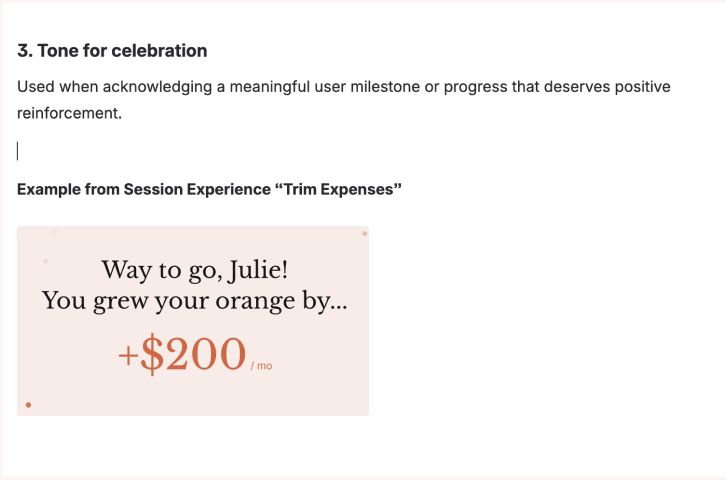
This is the part where I thanked my past self for documenting all of my content decisions in rationales. They would become the base of content patterns, and glossary.
6. Content taxonomy
From my audit I had categorized the entire Money Canvas content ecosystem into 3 main parent objects with distinctive translation & content needs.
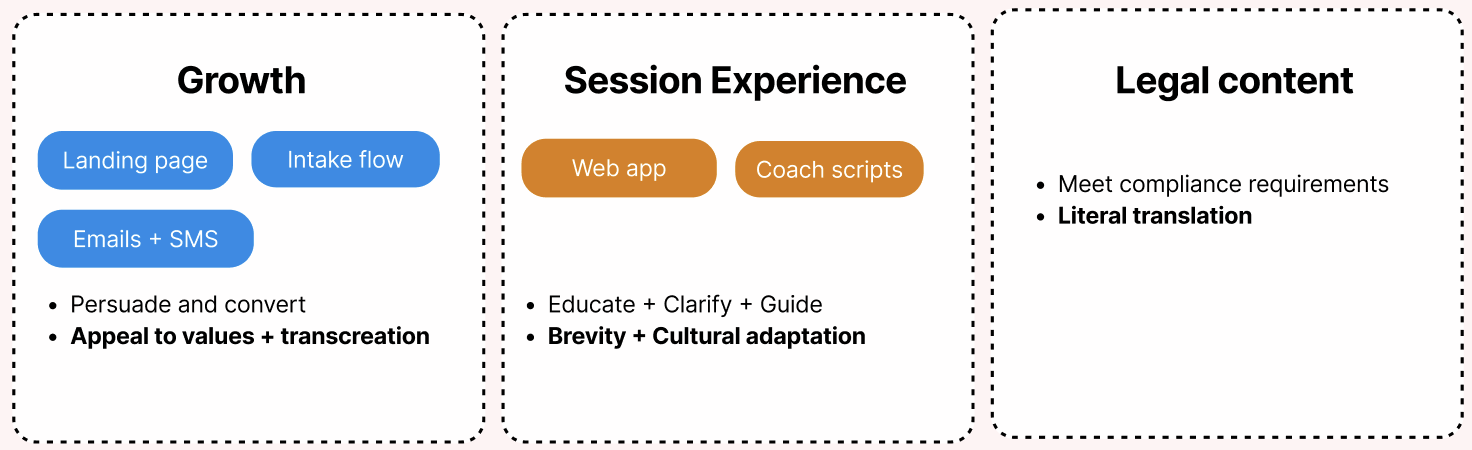
This graphic shows each parent object with their respective child (pills), the communication objective, and the translation approach required.
Yes, it took more time. But it would was the best way stop more content debt from piling up.
7. Cross-functional alignment
No outstanding work comes from working in silo, I partnered closely with:
Coaches → validating tone, emotional resonance, and clarity
Multicultural Experience team → linguistic alignment + translation approach validation
Growth team → brand context and voice validation
Design & PM → UI constraints, pattern definition, content object taxonomy
Engineering → AI integration + CMS optimization
8. Before & after
Web app session
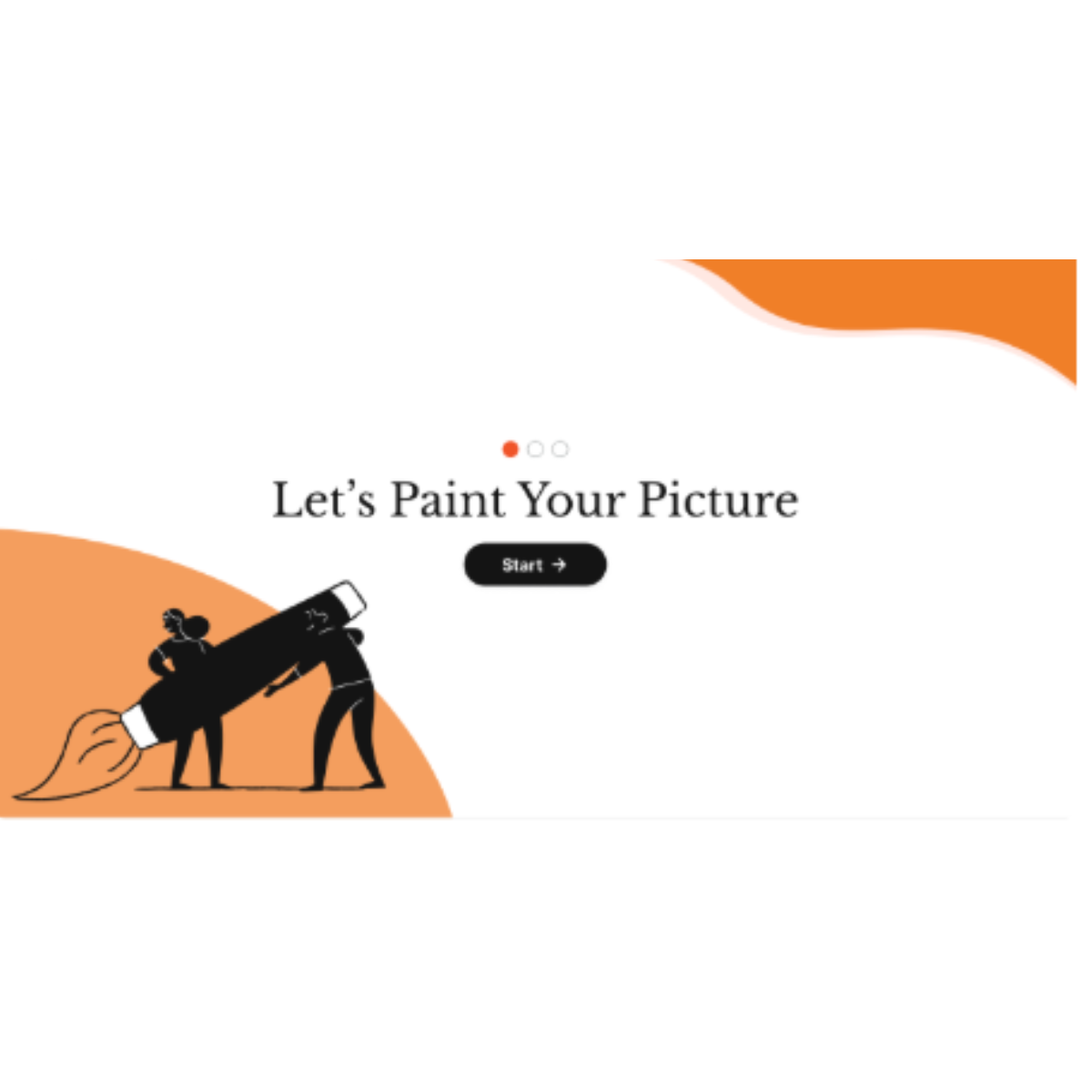
Original English version
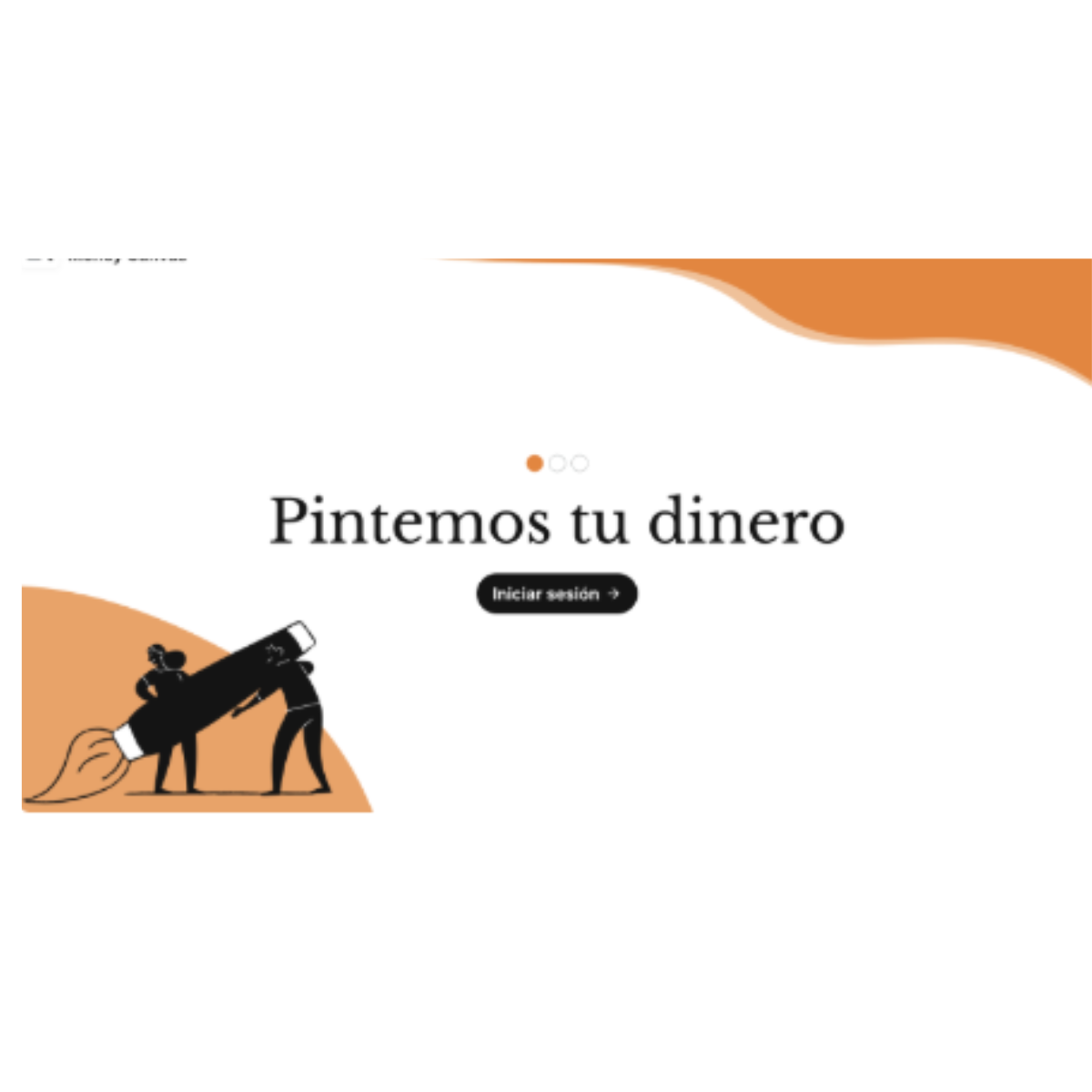
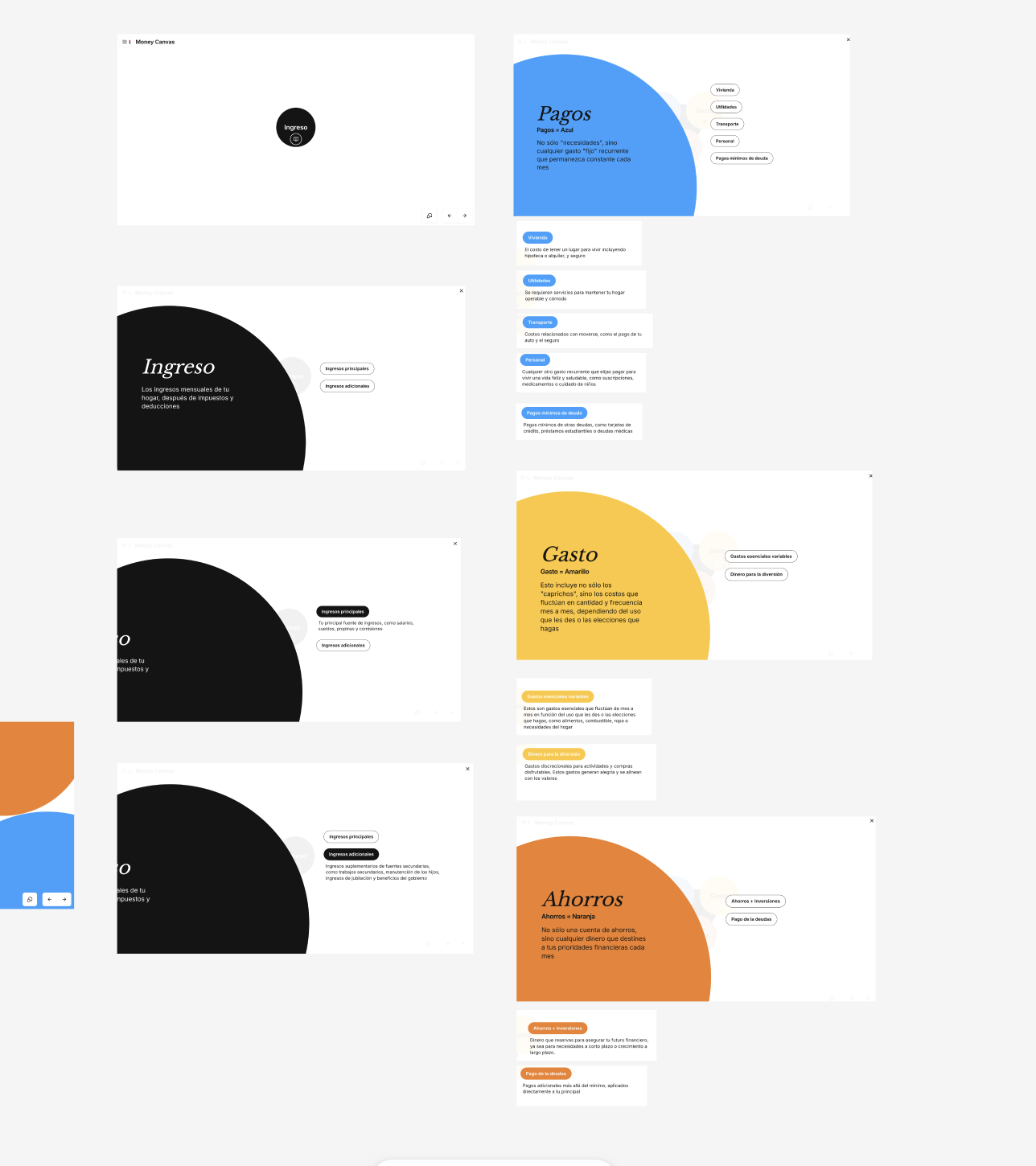
❌ Literal translation sounds more like users will color their dollar bills instead of creating their financial picture
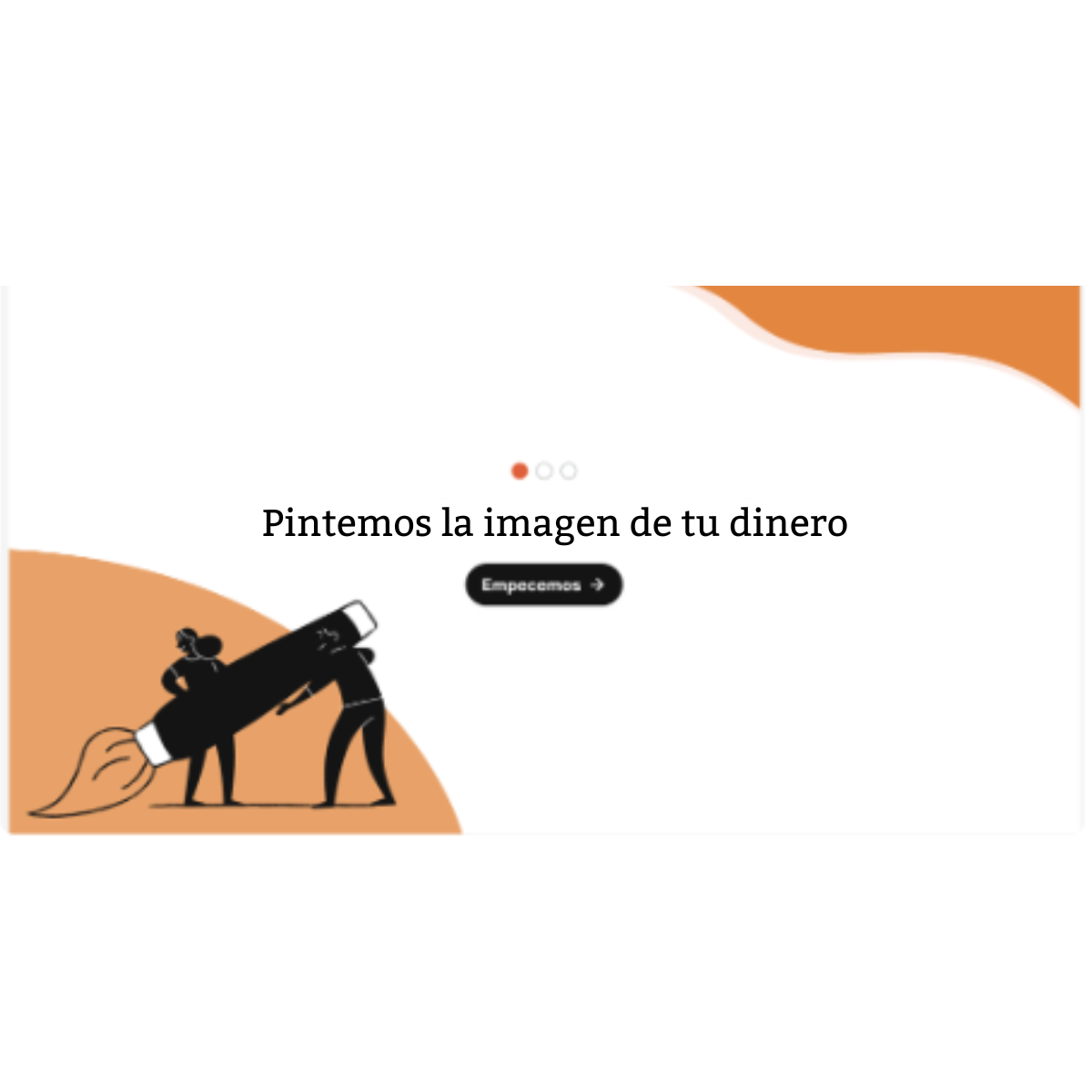
✅ Culturally adapted translation. Keeps original meaning and the intent,
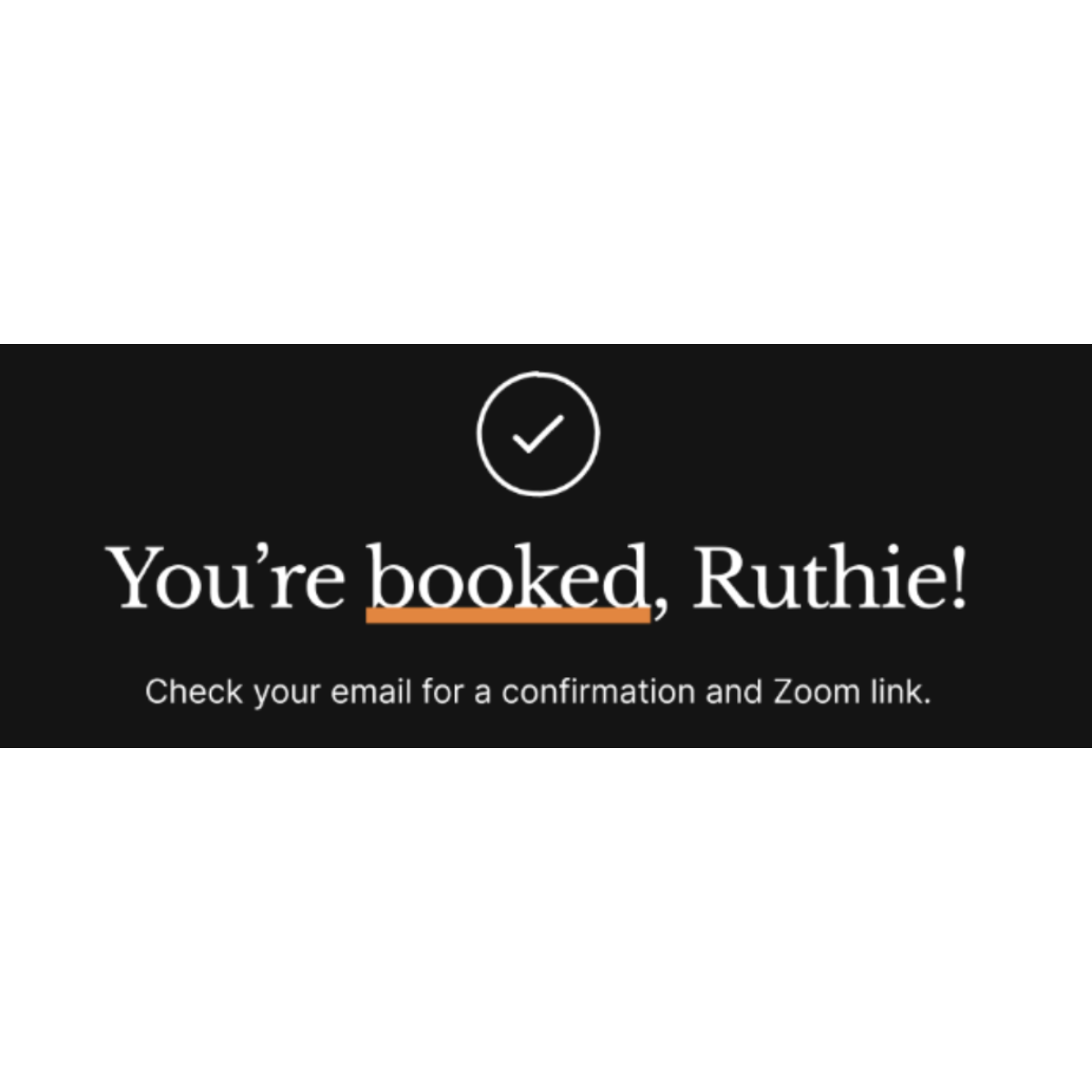
Booking confirmation
Original English version
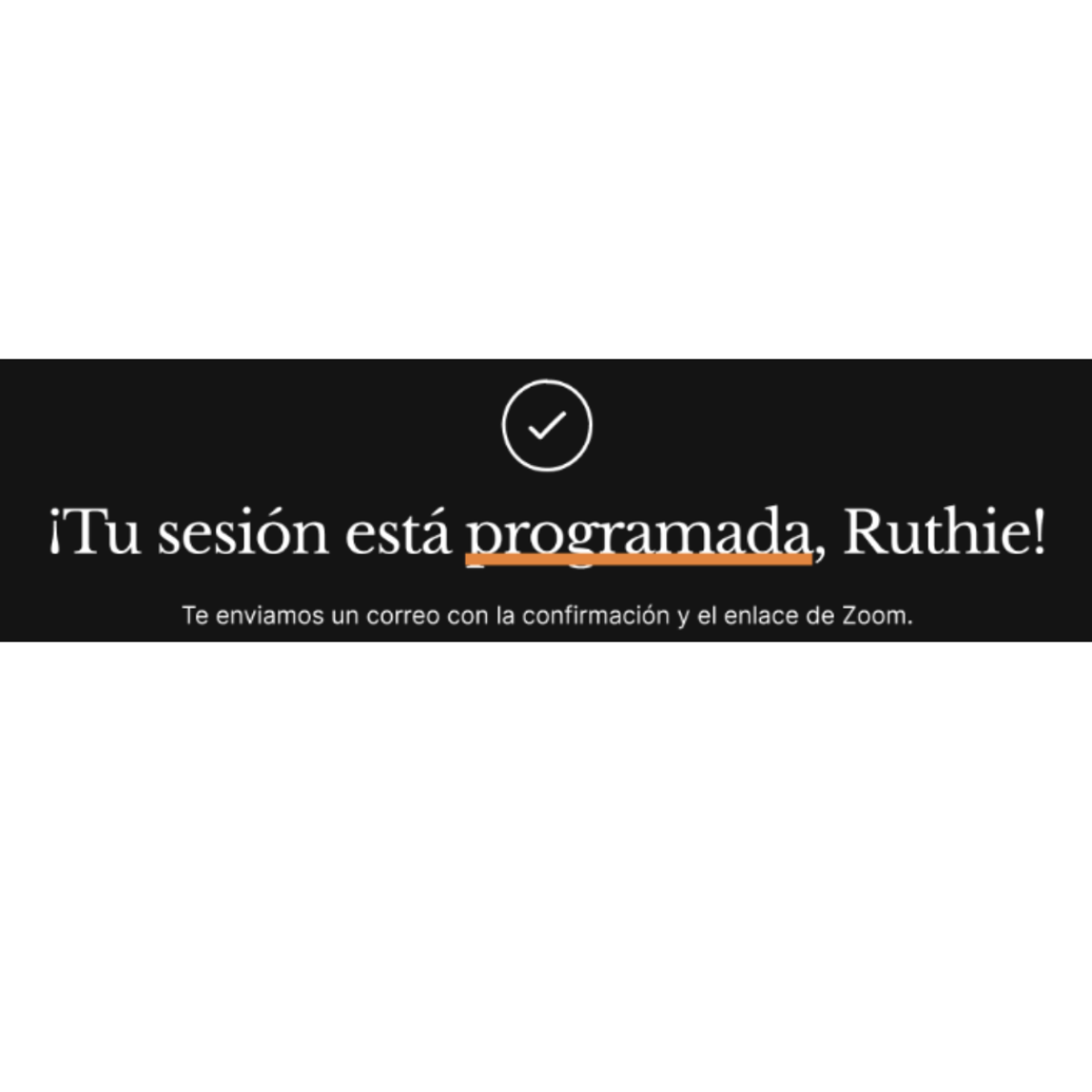
Translated version adapted to meet hispanic users expectations and trust needs
Session prompt
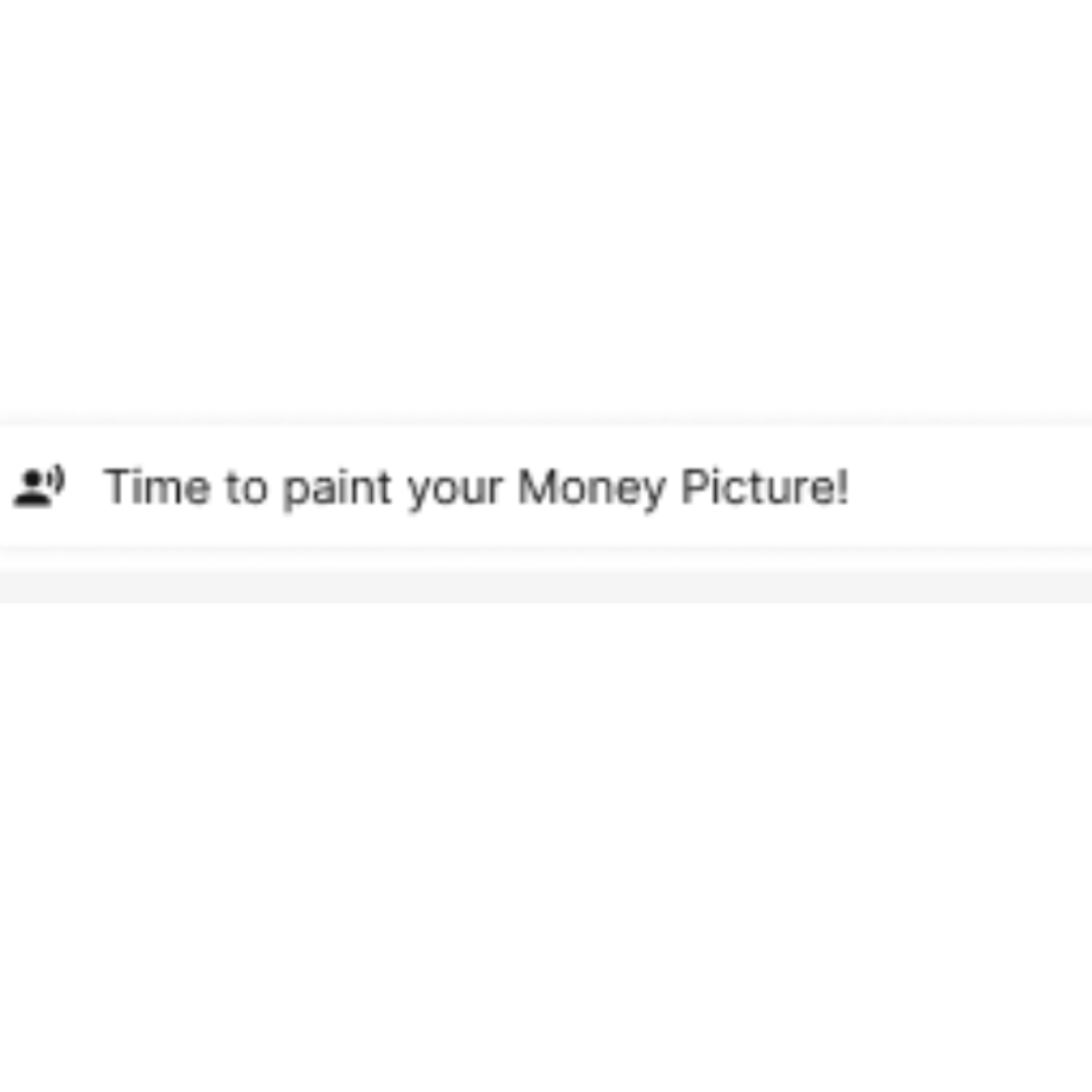
Original English version
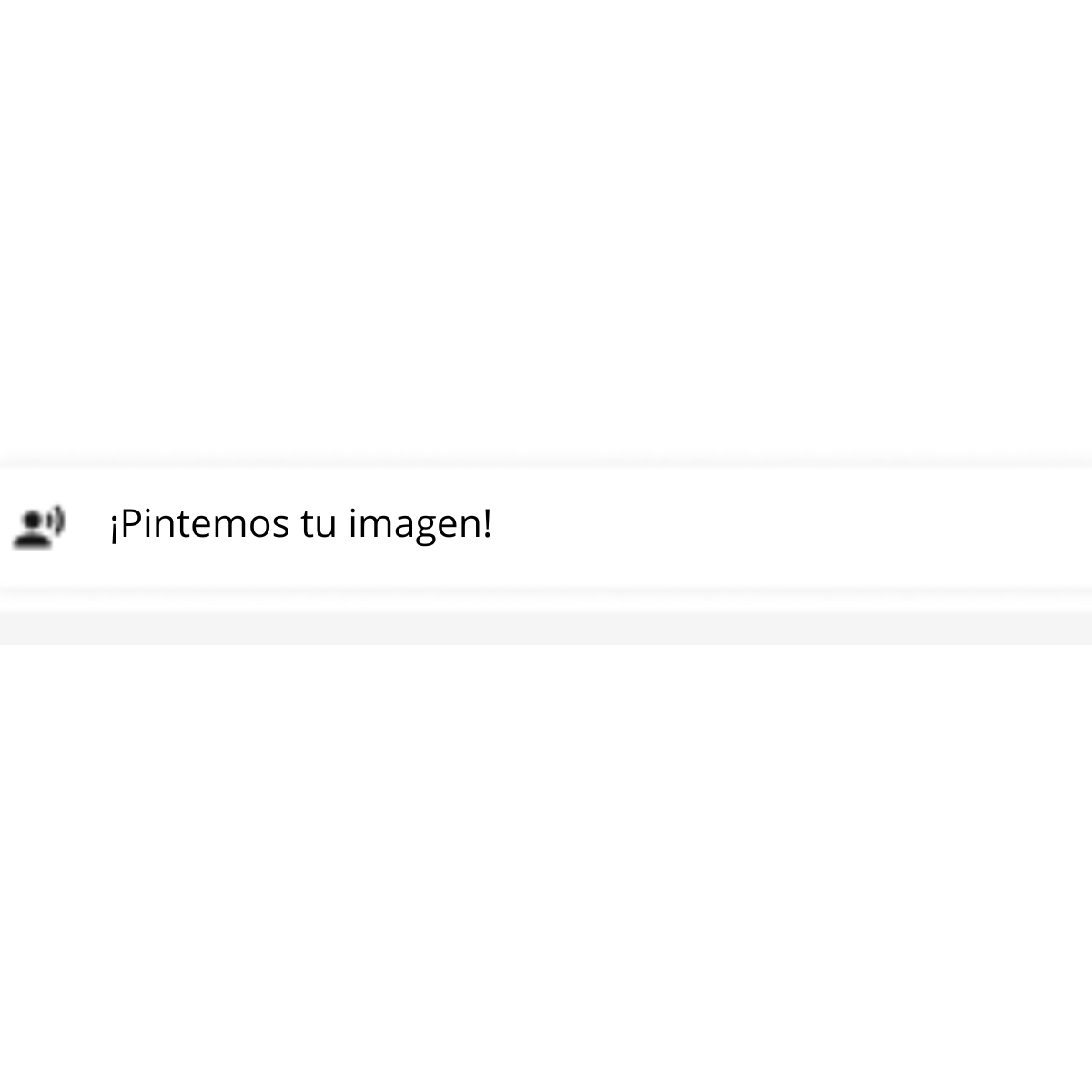
Warm, relational, aligned with coaching voice
9. Content wins 🏆✨
In 3 months I...
Delivered a comprehensive, scalable bilingual content system validated by designers, coaches, and translators.
Targeted low effort + high impact content needs
Created a Jira board for Content Design
Created Content wiki for future content designers
Positioned the Design team as key player in cross-functional collaboration and Ops enabler